TL;DR
Three ideas before you begin
- Assess the market and channels before keywords
- Separate modeled estimates from verifiable facts
- Place every opportunity in an impact-versus-effort matrix
Before you start
Prepare the inputs
- Have your own domain and target market ready
- Choose three to five competitors with a comparable business model
- Use one observation window, ideally the latest three to six months
Step 1
Define the question, market, and competitor set
Tools cannot define the question for you. Lock the research scope first so later numbers remain comparable.
- 1.1
Write a one-sentence hypothesis
For example, “Competitor A is growing organic traffic through new category pages,” instead of the vague goal “research competitors.”
- 1.2
Select comparable competitors
Prioritize sites serving the same region and audience with a similar model. Use large marketplaces as benchmarks, not direct peers.
- 1.3
Fix the time window and geography
Use the same country or region and month range in both tools, and note any difference in measurement methodology.
You should now have a scope table containing the question, market, time window, and competitor domains.
Step 2
Use Similarweb to size traffic and channels
This stage answers where the opportunity sits before explaining individual keywords.
- 2.1
Compare trends, not one-month absolutes
Record visit trends, inflection points, and seasonality. Modeled traffic is best for direction and relative differences, not exact analytics totals.
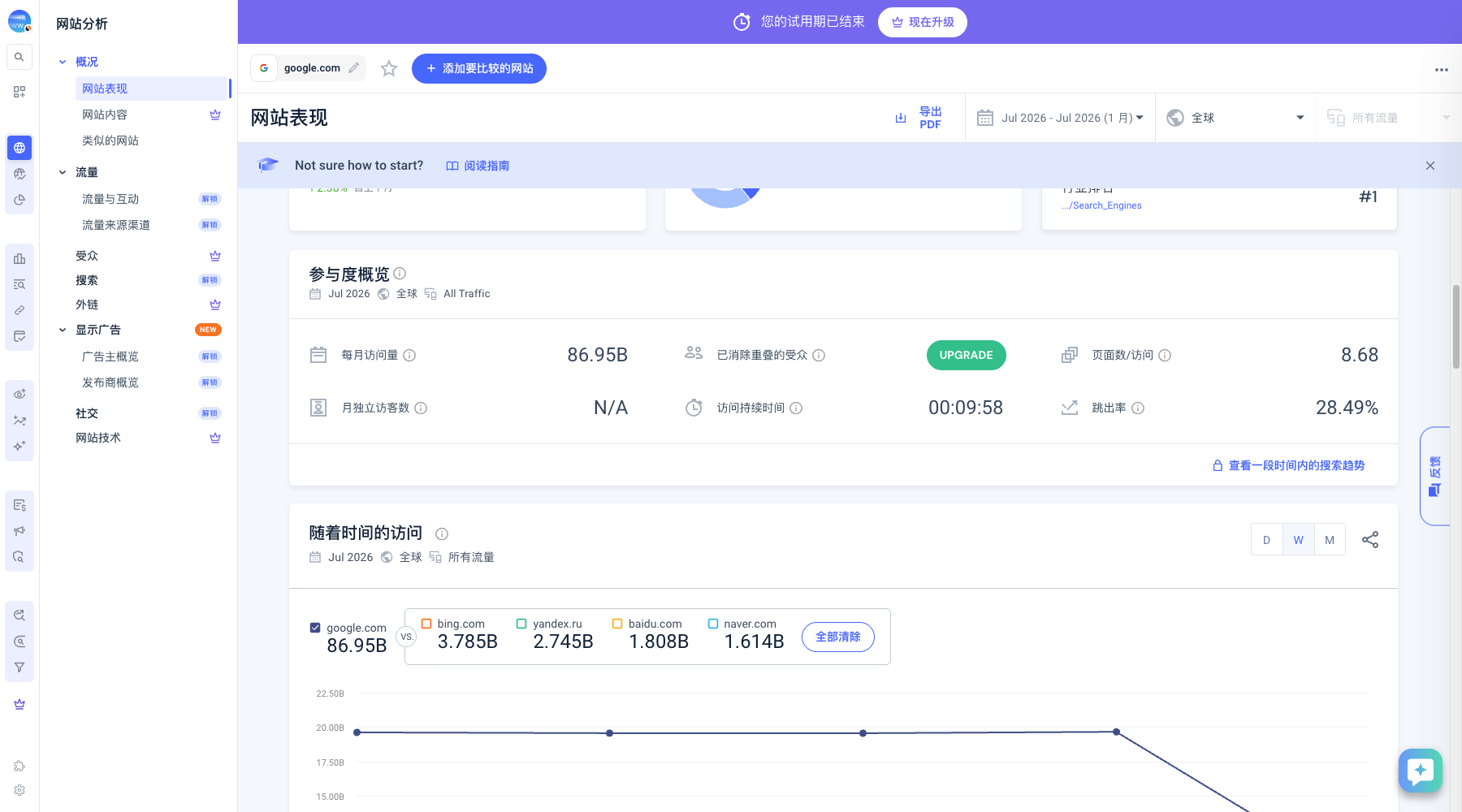
Use consistently scoped trends to judge scale changes instead of comparing isolated months. Markers- 1 Engagement metric group
- 2 Competitor trend comparison
- 3 Traffic report entry
Read visits, duration, pages per visit, and bounce rate together, then compare competitors on the same trend scope. One improved metric does not prove the whole experience improved.
Verify source: Similarweb Website Performance: engagement and trend - 2.2
Break down the channel mix
Compare organic, paid, direct, referral, and social shares to identify each competitor’s strongest and fastest-growing channels.
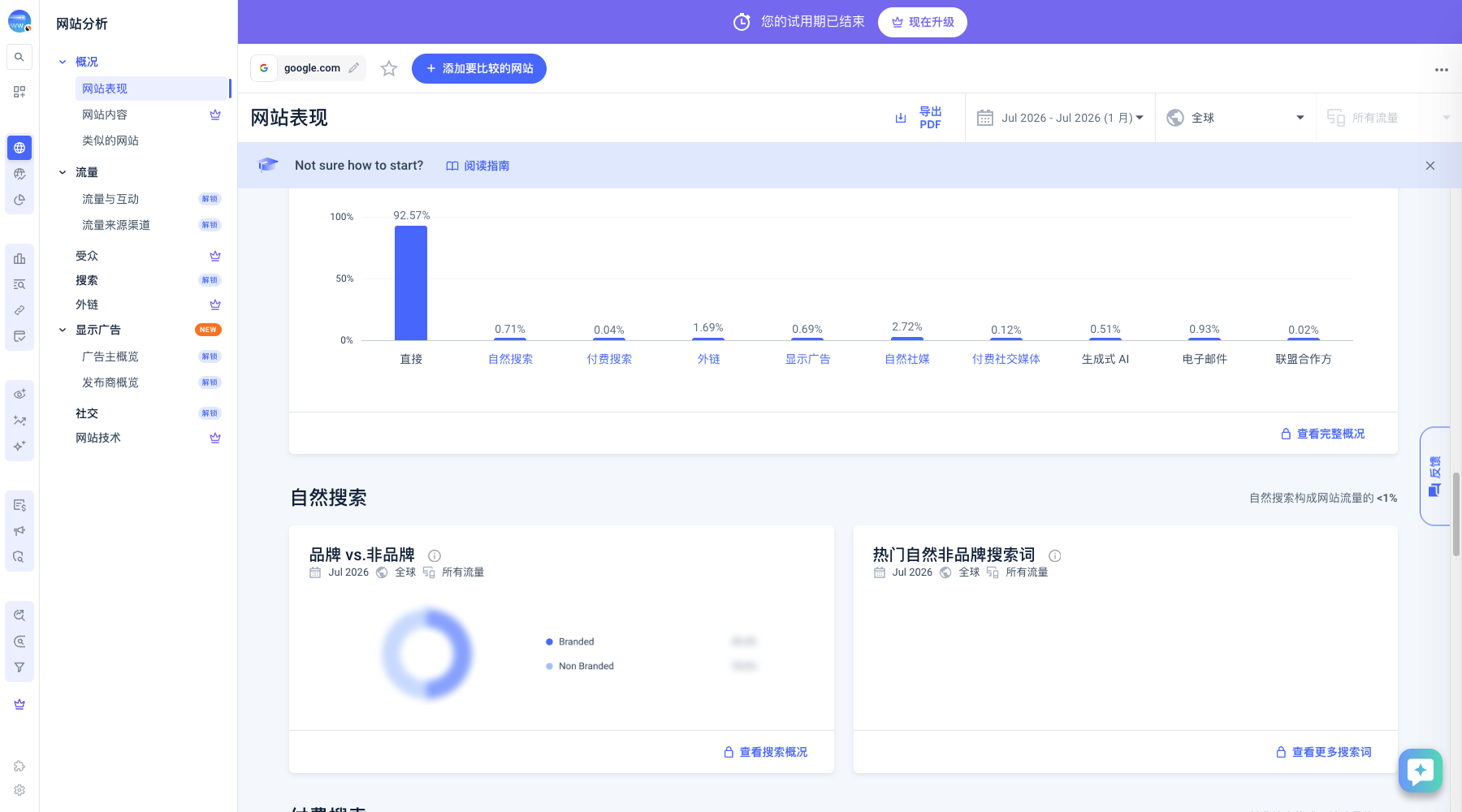
Use channel share to decide whether the next evidence should come from search, referrals, social, or ads. Markers- 1 Direct traffic
- 2 Search channels
- 3 Social and AI channels
- 4 Branded vs non-branded search
Compare channel share first, then open the relevant report for keyword, referral, social, or ad evidence. The channel chart shows where traffic comes from, not why.
Verify source: Similarweb Website Performance: channel overview - 2.3
Check geography and audience fit
Confirm that traffic comes from your target market and mark unrelated regions or business lines as noise.
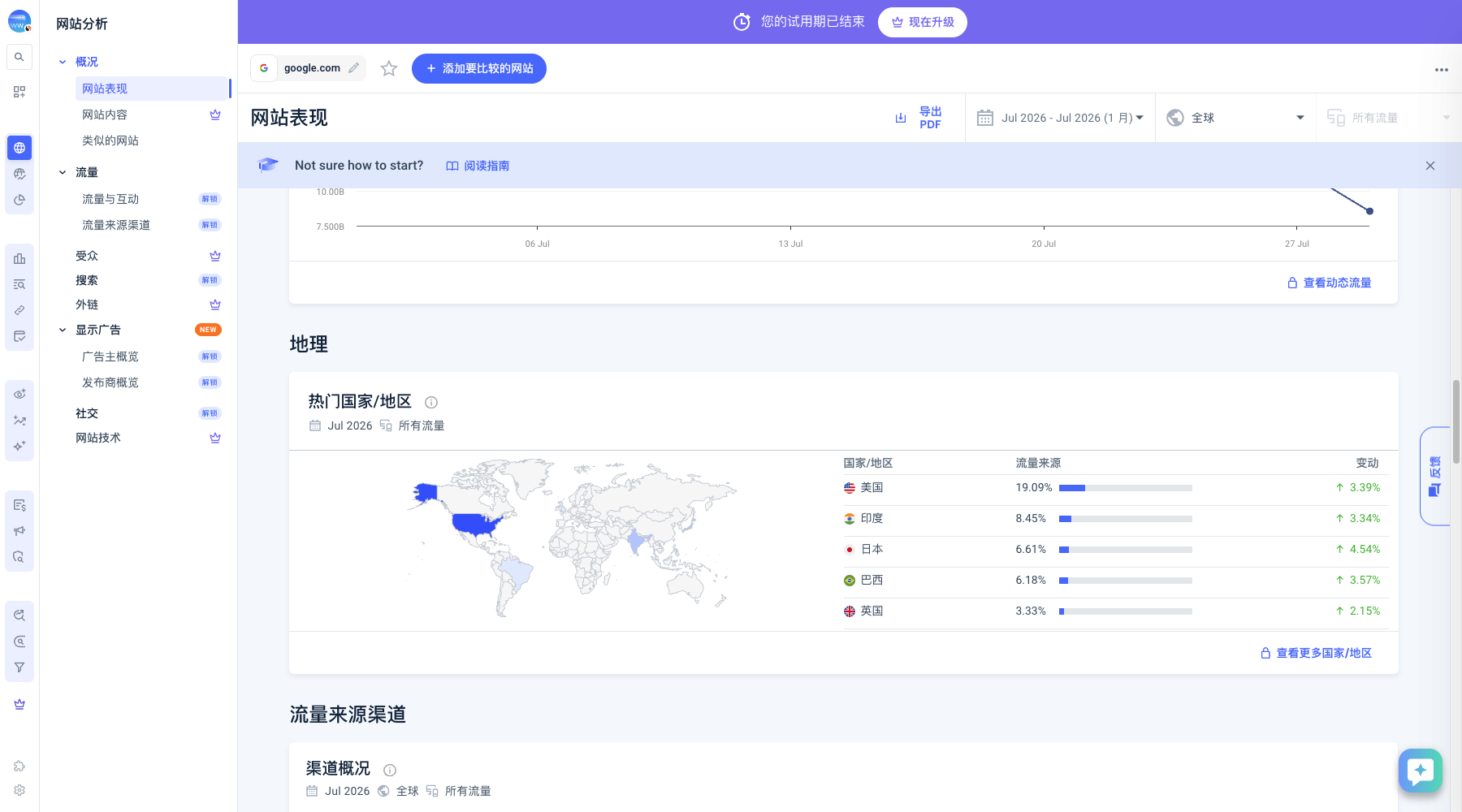
Confirm the competitor advantage exists in the target market rather than being distorted by global totals. Markers- 1 Geographic distribution map
- 2 Country traffic share
- 3 Share change
The map is for orientation; the table provides comparable evidence. Check whether the target market ranks meaningfully, then review share and change instead of assuming opportunity from global scale.
Verify source: Similarweb Website Performance: top countries and regions
Write one channel diagnosis per competitor, such as “organic share is high and has grown for three consecutive months.”
Step 3
Use Semrush to investigate keywords and pages
Turn the high-potential channels found in Similarweb into search themes, landing pages, and content gaps.
- 3.1
Start with organic competitors
Discover domains with high keyword overlap, then cross-check them against business competitors so you do not miss search-native rivals.
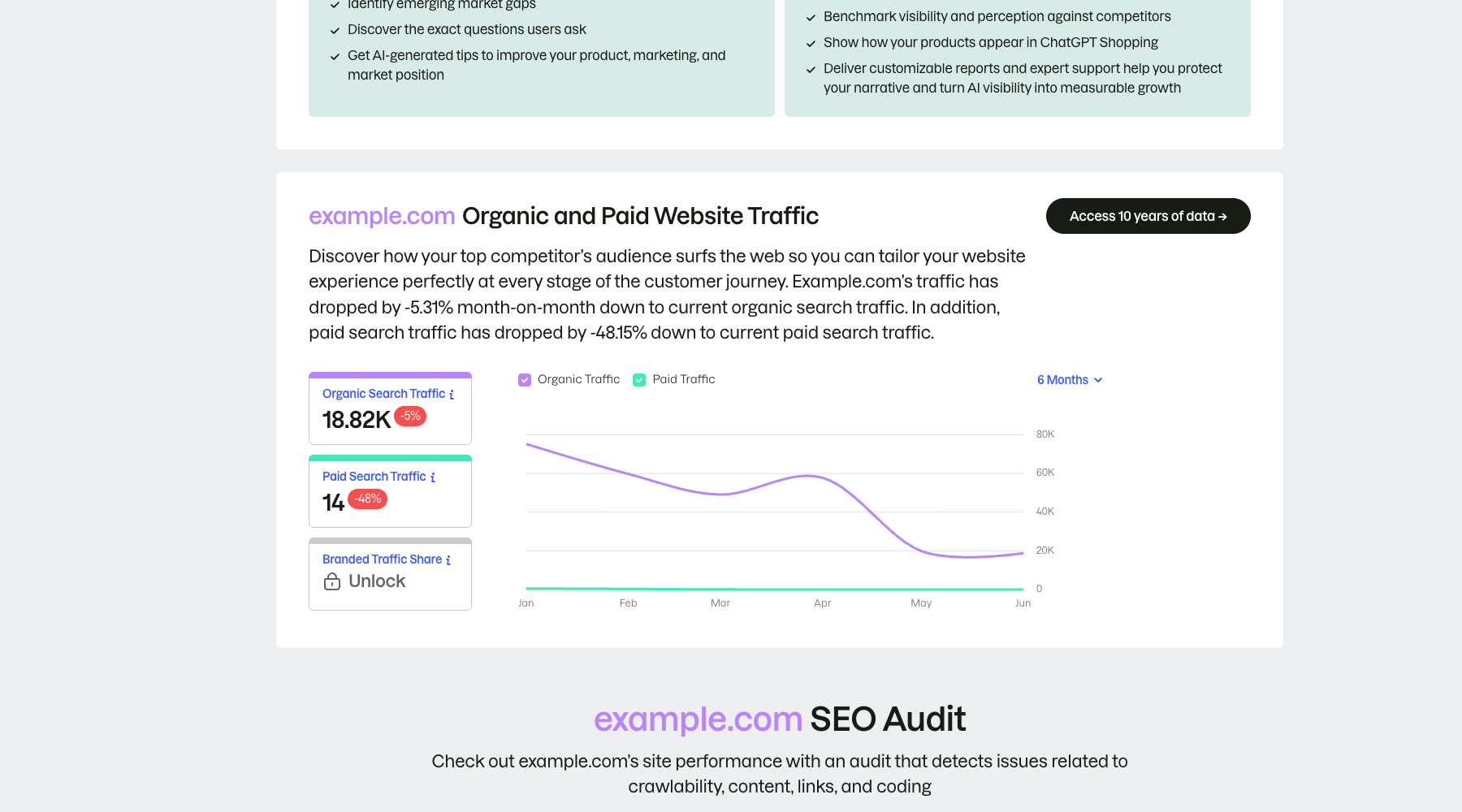
Before keyword analysis, confirm whether competitor growth is primarily organic or paid. Markers- 1 Organic search traffic
- 2 Paid search traffic
- 3 Change trend
Separate organic from paid search before comparing their direction of change. The public example explains the interface structure; production research still requires consistent market, device, and date scopes.
Verify source: Semrush official organic and paid traffic report - 3.2
Group keyword gaps
Group gaps by topic and intent instead of processing rows one by one. Keep terms tied to your product, region, and conversion journey.
- 3.3
Reverse-engineer top pages
Inspect the pages ranking for those terms and record page type, depth, update cadence, and internal-link placement.
Produce three to five topic clusters, each tied to keywords, competitor pages, and a page you can create or improve.
Step 4
Combine evidence and prioritize action
The final step is not another export; it is a decision the team can execute.
- 4.1
Assign confidence to evidence
Mark opportunities supported by both channel trends and keyword-page evidence as high confidence; flag single-source estimates for validation.
- 4.2
Use an impact-versus-effort matrix
Score impact using market fit, intent, and conversion potential; score effort using authority, resources, engineering, and content cost.
- 4.3
Set a review cadence
Give every priority an owner, first action, validation metric, and review date so the report turns into work.
The final list should explain why to act, what comes first, who owns it, and when success will be evaluated.
WHO · HOW · WHY
How this guide was written and reviewed
- Who
- Independently written and manually reviewed by the RelayX Editorial Team, with update and capture dates shown on the page.
- How
- Fix geography, time, device, and domain scope first, then cross-check third-party estimates with owned analytics, search-console data, or public pages. No single traffic or authority score is treated as a business result.
- Why
- The goal is not to restate product features but to help you produce “A competitor opportunity list with evidence, priorities, and next actions”. The workflow is organized around that outcome with checkpoints, limitations, and next actions.
Interface captures come from official accessible product pages or the current browser interface. Each appears under its matching step with numbered controls and data points. When real functional UI cannot be publicly verified, the guide says so instead of using a marketing homepage as filler. No third-party tutorial text or imagery is reused; third-party brands and interface rights remain with their respective owners.